Architectural Finishes &
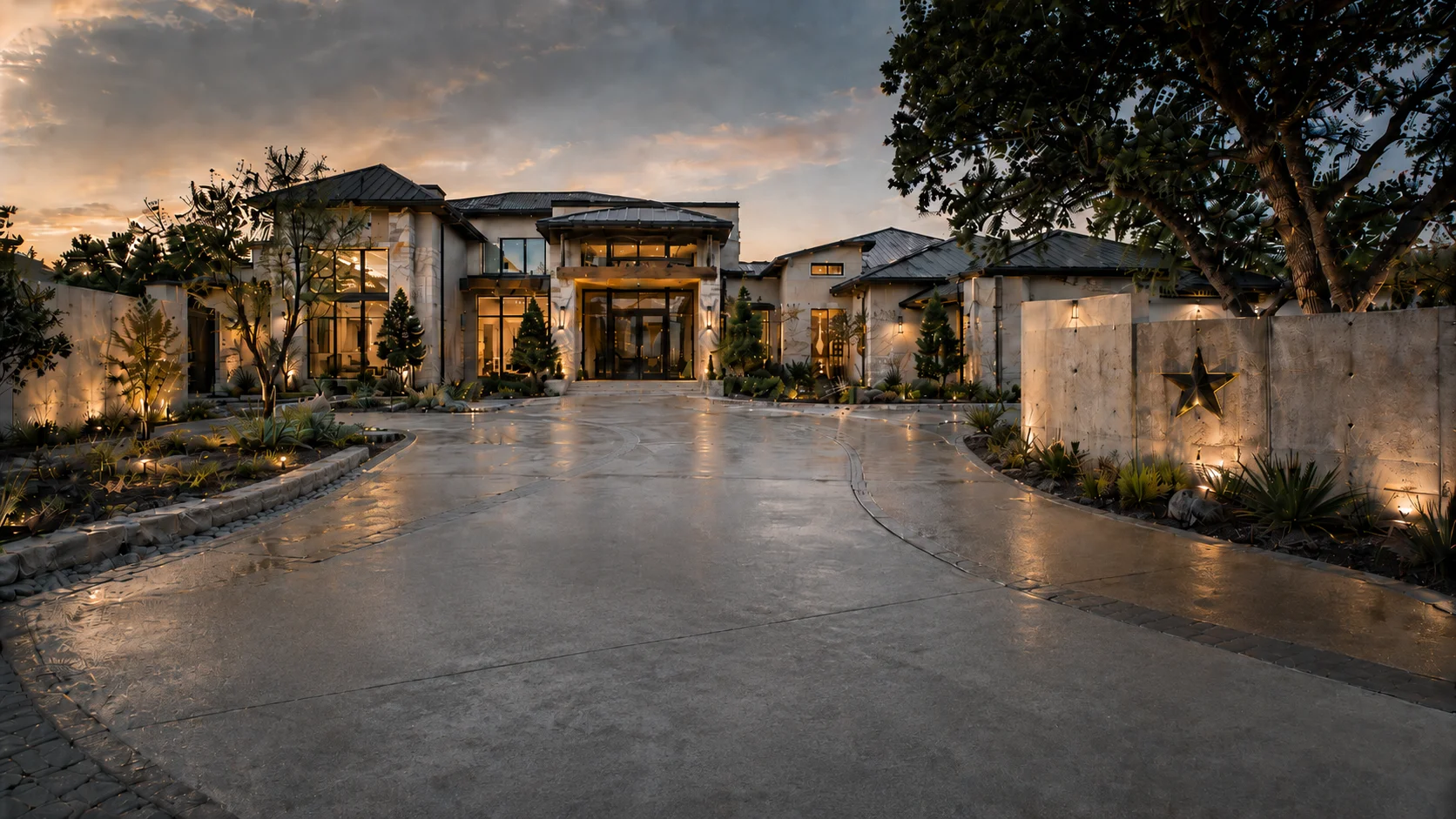
Compare decorative finishes alongside the slab design beneath them. Ask about site preparation, mix design, reinforcement, joints and drainage before selecting a finish; the right specification depends on the site and intended use.
Finishes Guide
Stamped Concrete
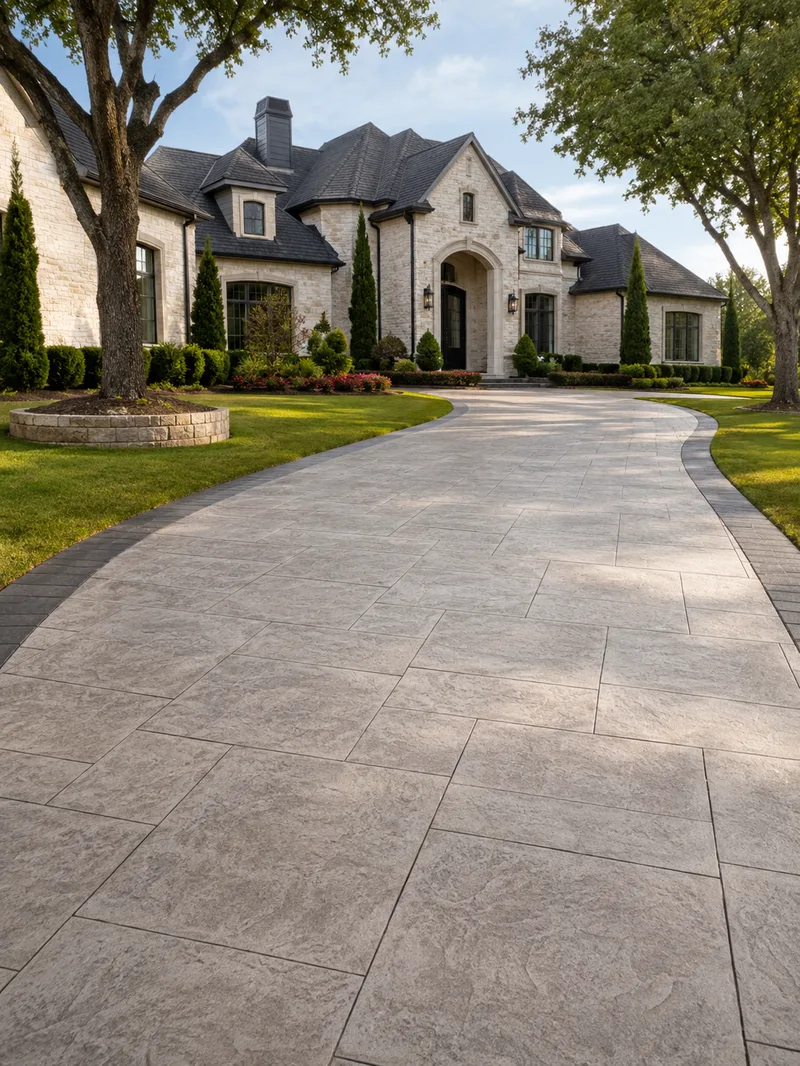
Stamped concrete uses textured rubber mats pressed into freshly poured concrete to replicate the look of natural materials at a fraction of the cost and long-term maintenance.
- •Ashlar Slate — Large, irregular flagstone-style panels, popular for patios and pool decks where a sophisticated, organic look is desired.
- •Wood Plank — Realistic plank textures and grain lines, often used for elevated decks, walkways, or transitional spaces near outdoor living areas.
- •Flagstone & Cobblestone — Classic, time-tested patterns that pair well with traditional and Hill Country architectural styles.
Color is applied through integral pigments, color hardeners, and antiquing release agents to create depth and variation rather than a flat, uniform tone. Once cured, stamped surfaces should receive a professional-grade penetrating or film-forming sealer. Sealing isn't optional — it's what protects the color and texture from UV fading, staining, and the freeze-thaw cycles that can otherwise cause surface flaking (spalling) over time.
Exposed Aggregate
If there's one finish that defines Texas outdoor concrete, it's exposed aggregate — and for good reason. The process involves placing concrete with decorative gravel mixed throughout, then washing and brushing away the top layer of cement paste once it's partially cured, revealing the smooth, rounded stones underneath.
The result is a surface that's:
- ✓Slip-resistant even when wet, making it a smart choice around pools
- ✓Cool underfoot compared to smooth or dark-colored concrete, since the exposed stone reflects more heat
- ✓Extremely durable, with a textured surface that hides minor wear and resists visible staining better than smooth finishes
- ✓Naturally Texan in appearance, pairing well with limestone, native stone, and xeriscaped landscaping
Aggregate options range from local river gravel in earth-tone blends to specialty colored stones for a more curated look.
Broom Finish & Borders
The broom finish is the workhorse of Texas concrete — a textured surface created by dragging a broom across the concrete while it's still workable, leaving fine parallel ridges that provide reliable slip resistance.
On its own, broom finish is the most economical option for driveways and walkways. Elevated with a picture-frame border — a smooth, hand-troweled band (typically 6 inches wide) framing the perimeter of the slab, often in a contrasting color or texture — it becomes a defined architectural feature rather than a plain slab.
Rock Salt Finish
Rock salt finish is created by pressing coarse rock salt crystals into the surface of freshly placed concrete, then washing them out once the concrete has set. The result is a field of small, irregular pits across the surface — an organic, weathered texture that closely resembles natural travertine or worn limestone, without the cost or maintenance of quarried stone.
It's a popular choice for pool decks, patios, and walkways where a softer, more "lived-in" look is desired, particularly in homes with Mediterranean, Tuscan, or Hill Country design influences.
Stained & Polished
For interior spaces — garages, workshops, basements, and even main living areas in some modern homes — stained and polished concrete delivers a high-end look with minimal upkeep.
- •Acid Staining reacts chemically with the minerals in the concrete to create translucent, marbled, variegated color in earth tones.
- •Water-Based Acrylic Stains offer a broader, more consistent color range, including vibrant or solid tones.
- •Polished Concrete uses progressively finer diamond abrasives to grind and polish the slab surface to a smooth, glossy (or satin) sheen.
Overlays & Resurfacing
If your existing concrete is structurally sound but cosmetically tired — faded color, surface staining, minor cracking, or a dated finish — a concrete overlay can be the smart alternative to full demolition and replacement.
Overlays are thin, polymer-modified concrete coatings applied directly over the existing slab. They can be stamped, stained, or textured just like a new pour, effectively giving you a brand-new decorative surface.
Structural Flatwork Standards
Driveways & Extensions
A driveway sees more abuse than almost any other concrete surface on a property — daily vehicle loads, temperature swings, and constant exposure to the elements.
Accessory & ADU Slabs
Garage slabs, workshop foundations, and accessory dwelling unit (ADU) slabs carry different demands than a patio — often including heavy equipment or vehicle lifts.
Retaining Walls & Steps
Poured concrete retaining walls and structural steps do double duty — they're functional soil-management tools and design elements.
Value & Pricing Factors
Concrete pricing varies widely from project to project, and "price per square foot" alone rarely tells the full story. Here's what actually drives the cost of your project:
Site Access
Can a concrete truck reach the pour site directly, or does the mix need to be wheelbarrowed or pumped a long distance? Limited access adds labor time and cost.
Demolition & Removal
Removing and hauling away existing concrete adds cost before the new project even begins — and disposal fees vary by location.
Sub-Grade Conditions
Poor existing soil, drainage issues, or tree roots may require additional excavation, base material, or drainage work to prepare a stable foundation.
Slab Thickness & PSI
Higher-strength mixes and thicker slabs — recommended for driveways, RV pads, and Texas clay soils — cost more per square foot than standard patio specs.
Reinforcement Type
Steel rebar grids cost more than wire mesh, but they're the reinforcement that actually performs over the life of the slab.
Finish Complexity
A plain broom finish is the most economical option. Stamped patterns, multiple colors, hand-applied borders, and specialty textures all add labor and material cost.
Drainage Integration
French drains, slot drains, and custom grading add upfront cost but prevent far more expensive water-related damage down the road.
| Cost Driver | Why It Matters for Your Project |
|---|---|
| Site Access | Can a concrete truck reach the pour site directly, or does the mix need to be wheelbarrowed or pumped a long distance? Limited access adds labor time and cost. |
| Demolition & Removal | Removing and hauling away existing concrete adds cost before the new project even begins — and disposal fees vary by location. |
| Sub-Grade Conditions | Poor existing soil, drainage issues, or tree roots may require additional excavation, base material, or drainage work to prepare a stable foundation. |
| Slab Thickness & PSI | Higher-strength mixes and thicker slabs — recommended for driveways, RV pads, and Texas clay soils — cost more per square foot than standard patio specs. |
| Reinforcement Type | Steel rebar grids cost more than wire mesh, but they're the reinforcement that actually performs over the life of the slab. |
| Finish Complexity | A plain broom finish is the most economical option. Stamped patterns, multiple colors, hand-applied borders, and specialty textures all add labor and material cost. |
| Drainage Integration | French drains, slot drains, and custom grading add upfront cost but prevent far more expensive water-related damage down the road. |
A good contractor will walk through each of these factors with you during your consultation, so you understand what's driving your estimate — without vague "call for pricing" obfuscation or surprises once the work begins.
Ready to Start Your Project?
Use these guides to compare options, then ask whether an independent contractor is available for your project. Agree any inspection and estimate directly with them.
Ask about a contractor introduction
Tell us about your project. A suitable independent contractor must be confirmed before an introduction can be made. Contractor availability, an estimate and a response time are not guaranteed.