
Texas Concrete Contractors for Driveways, Stamped Patios & Structural Slabs
Architectural Concrete Built for Texas Permanence.
Connecting homeowners with master-level concrete craftsmanship.
Engineered for Texas soils. Built to last generations.
What to Ask Before You Choose a Concrete Contractor
Concrete estimates can differ in site preparation, materials, reinforcement and exclusions. This resource explains those differences so you can ask better questions. We are developing contractor introductions alongside the guides; we do not perform the work ourselves.
Our local guides cover Southlake, Frisco, Flower Mound, Bellaire, The Woodlands and Lakeway. That means surviving expansive clay soils that swell and shrink, surviving 100-degree summers that flash-cure a slab, and surviving the strict scrutiny of HOA committees.
Concrete Strong Enough To Handle Texas Freeze-Thaw Cycles
Ask which concrete mix the project designer specifies for your soil, loads and exposure. A generic strength number does not replace a site-specific design.
Rebar Grid, Not Wire Mesh So Your Slab Holds Together
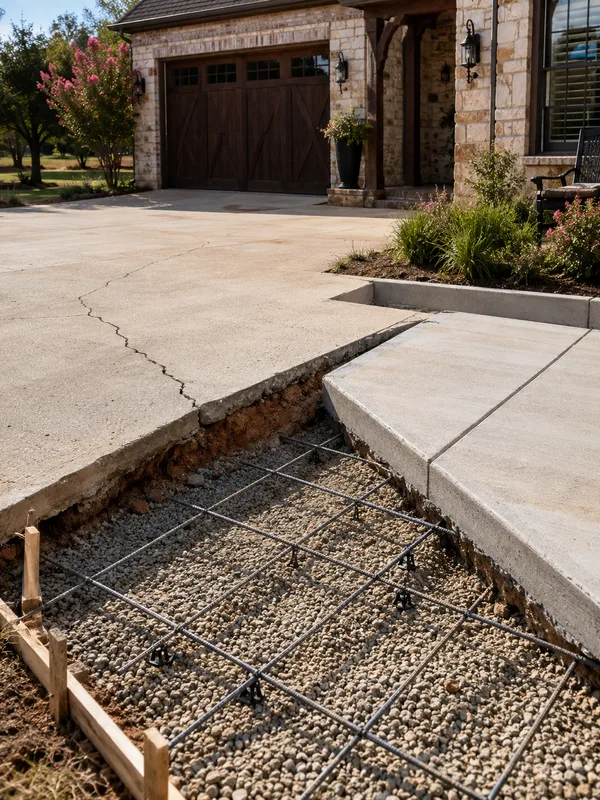
Ask how the specified reinforcement will be supported and held in position during the pour. Reinforcement type, spacing and depth should follow the project design.
Sub-Base Prep So The Ground Can Move Without Taking Your Slab With It
Ask about excavation, base material, compaction and drainage. The required preparation depends on the ground conditions and intended use; no preparation method guarantees a crack-free slab.
Project Types to Explore
Stamped Concrete Patios
Patterned concrete mimicking flagstone, slate, brick, or wood plank. Sealed to lock in multi-tone coloring and resist UV fading.
drive_etaCustom Driveways & Extensions
Replacement driveways, RV/boat pads, and picture-frame border layouts designed to support vehicle weight without shifting.
poolCool-Deck Pool surrounds
Heat-reflective, textured pool decks that remain comfortable under the Texas sun and slip-resistant when wet.
domainGarage & Accessory Slabs
Shed pads, workshop foundations, and ADU slabs engineered with robust vapor barriers and flat-troweled specifications.
layersResurfacing & Overlays
Transform sound but visually tired slabs with polymer-modified overlays, saving the cost and mess of full demolition.
Why Your Neighbor's Driveway Has That Diagonal Crack And Why Ours Don't
If you've lived in Texas long enough, you've probably seen it: a driveway with a diagonal crack running corner to corner, or a patio with one edge lifted an inch higher than the rest. None of this happens by accident, and almost none of it happens because the concrete itself was "bad."
Most of North and Central Texas sits on **expansive clay soil**. This clay acts like a sponge, changing volume dramatically based on moisture. After a wet spring, the clay absorbs water and swells, lifting slabs. After a dry summer, the same soil shrinks and pulls away, leaving empty voids. This seasonal push-pull cycle causes under-prepared concrete to fracture.
Discuss subgrade preparation, reinforcement and control-joint layout with your contractor or engineer. Each affects how a slab responds to movement; none eliminates all cracking.
Texas Service Areas
Each chapter is a local planning guide. Use it to identify soil, drainage and approval questions for the independent contractor you choose.
Southlake Chapter
Premium stamped patios, custom driveways, and reinforced slabs designed for expansive clay soil.
Frisco Chapter
Driveway extensions, RV parking pads, and custom outdoor living flatwork built for rapid growth suburbs.
Flower Mound Chapter
Lakeside hardscaping, aggregate walkways, and tree-root-resilient patio installations.
Bellaire Chapter
Custom luxury rebuilds, flood mitigation grading, and drainage-integrated concrete slabs.
The Woodlands Chapter
Covenant-compliant exposed aggregate (pea gravel) driveways and root-barrier protected patios.
Lakeway Chapter
Bedrock-anchored structural foundations, retaining walls, and custom Hill Country limestone patios.
Ready to Build Your Legacy?
Tell us about your project to ask about an introduction. A suitable contractor and their availability must be confirmed separately; an estimate is not guaranteed.
Site-Specific Inspections
Ask your contractor to assess access, drainage and soil conditions.
HOA Application Assistance
Confirm the dimensions, finishes and documents your HOA requires.
Ask about a contractor introduction
Tell us about your project. A suitable independent contractor must be confirmed before an introduction can be made. Contractor availability, an estimate and a response time are not guaranteed.